What are Gulf Countries? Check Meaning, Members, Map, List and Role in Middle East
What are Gulf Countries? The Gulf Nations Countries represent a geopolitical union of six Arab states on the Arabian Peninsula known as the Gulf Cooperation Council (GCC), these nations are unified by their shared proximity to the Persian Gulf. Explore more about Gulf nations countries, meaning, Gulf nations list, Gulf nations map and their role in Middle East
Key Points
- The GCC was established May 25, 1981, in Riyadh by six member countries.
- GCC aims for coordination and integration in various fields among members.
- GCC's structure includes the Supreme Council, Ministerial Council, and Secretariat.
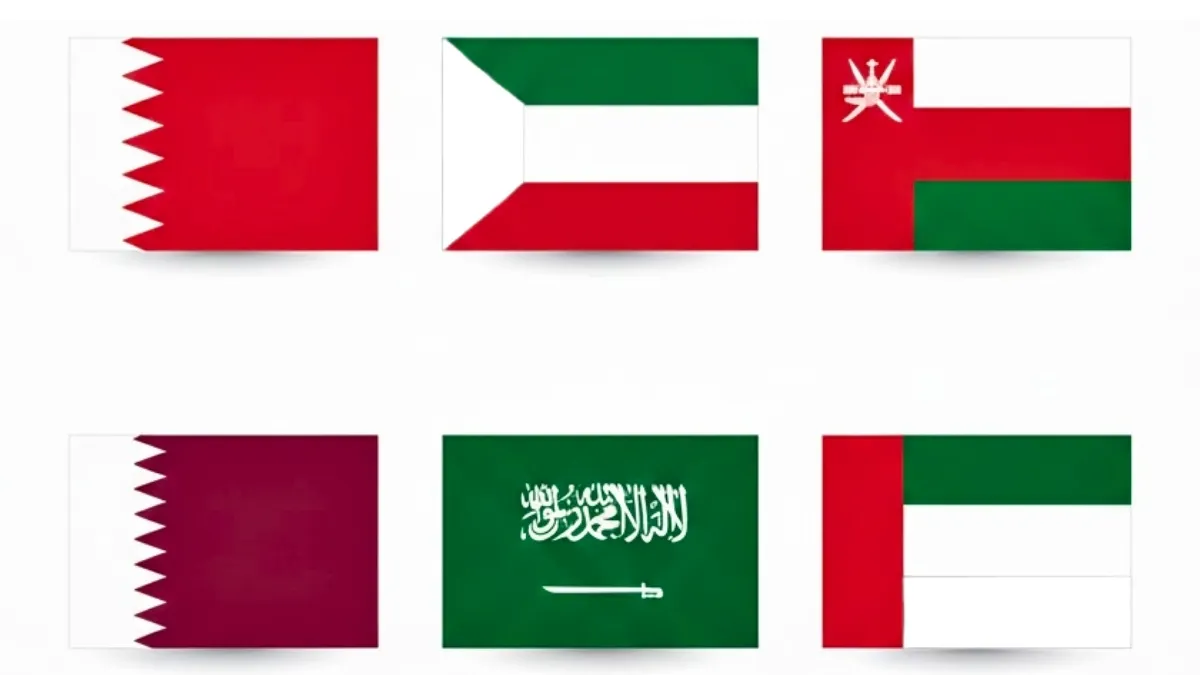
Gulf Nations: the "Gulf," they aren't just referring to a body of water but to a powerhouse region that bridges the gap between the East and the West. Historically known for pearl diving and maritime trade. The Gulf nations countries are a group of six-member countries, comprise Bahrain, Kuwait, Oman, Qatar, Saudi Arabia, and the United Arab Emirates. All Gulf countries situated along the Persian Gulf, this region serves as a vital global energy hub, housing a significant portion of the world's proven oil and natural gas reserves.
What are the Gulf Nations Countries?
The Gulf Cooperation Council (GCC) was established by an agreement on 25 May 1981 in Riyadh, Saudi Arabia among Bahrain, Kuwait, Oman, Qatar, Saudi Arabia and UAE in view of their special relations, geographic proximity, similar political systems based on Islamic beliefs, joint destiny and common objectives. Presently it encompasses a total area of 2,672,700 sq.km. The official language is Arabic.
The GCC objective is to have coordination, integration and inter-connection between Member States in all fields, strengthening ties between their peoples, formulating similar regulations in various fields such as economy, finance, trade, customs, tourism, legislation, administration, as well as fostering scientific and technical progress in industry, mining, agriculture, water and animal resources and establishing scientific research centres, setting up joint ventures.
GCC comprises some of the fastest growing economies in the world, mainly due to an increase in oil and natural gas revenues coupled with a building and investment boom backed by reserves, etc.
Also Read: India-US Trade Deal: Check Latest Updates, Significance & Challenges for Indian Economy
Organization Structure:
-
The structure of the GCC consists of the Supreme Council, the Ministerial Council and the Secretariat General.
-
The Secretariat is located in the city of Riyadh. The constitution of the GCC precisely reflected the importance of seeking ways to make the unity of Arab States a reality.
-
The constitution required the organization to provide “the means for realizing coordination, integration and cooperation” in economic, social and cultural affairs.
-
The Supreme Council (the highest authority of the GCC) comprises the Heads of State of the six member countries. The Supreme Council meets once a year in ordinary session
Gulf Nations Map:
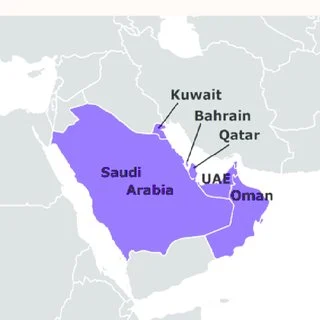
Source: ResearchGate
Gulf Nations List:
| S.No | Country | Joined GCC | Capital |
| 1 | Bahrain | 1981 | Manama |
| 2 | Kuwait | 1981 | Kuwait City |
| 3 | Oman | 1981 | Muscat |
| 4 | Qatar | 1981 | Doha |
| 5 | Saudi Arabia | 1981 | Riyadh |
| 6 | United Arab Emirates | 1981 | Abu Dhabi |
1. Saudi Arabia
As the largest GCC nation, Saudi Arabia is currently in the high-execution phase of Vision 2030, with non-oil activities now contributing over 50% to its real GDP. The Kingdom has transformed into a global tourism and entertainment magnet, headlined by "Giga-projects" like NEOM and a thriving sports sector. It remains the spiritual center of the Islamic world, hosting millions of pilgrims annually in Mecca and Medina.
2. United Arab Emirates (UAE)
The UAE stands as a premier global hub for finance, trade, and cutting-edge technology, with an economy projected to grow by over 5% this year. Through its "We the UAE 2031" strategy, it has become a world leader in AI adoption and renewable energy, exemplified by massive solar projects and its nuclear power program. Cities like Dubai and Abu Dhabi continue to break records in international tourism and luxury real estate.
3. Qatar
Qatar is a global energy titan, leveraging its position as a top exporter of Liquefied Natural Gas (LNG) to fund ambitious national development and high-stakes international diplomacy. Since hosting the FIFA World Cup, it has successfully pivoted toward becoming a cultural and educational center, hosting world-class museums and satellite university campuses. In 2026, it remains a key mediator in regional conflicts and a major investor in global infrastructure.
4. Kuwait
Kuwait maintains one of the world's strongest currencies and highest standards of living, backed by the sixth-largest oil reserves on the planet. The nation is currently focused on its "New Kuwait 2035" vision, which aims to revitalize its financial sector and modernize its infrastructure, including the massive Silk City project. It is known for its vibrant parliamentary culture and long-standing tradition of humanitarian diplomacy.
5. Oman
Oman is celebrated as the "hidden gem" of the Gulf, prioritizing environmental sustainability and the preservation of its authentic heritage under Oman Vision 2040. Its diverse landscape ranging from the fjords of Musandam to the green mountains of Salalah makes it a unique hub for eco-tourism and logistics. Strategically located outside the Strait of Hormuz, it is rapidly developing the Port of Duqm into a major international shipping terminal.
6. Bahrain
The GCC’s smallest member is also one of its most economically diverse, having pioneered the region’s shift toward banking and financial services decades ago. Bahrain continues to lead in FinTech and digital regulation, serving as a "sandbox" for new financial technologies in the Middle East. Its unique geography as an archipelago is central to its identity, with the historic "Pearling Path" serving as a UNESCO-recognized reminder of its maritime roots.
Why are they called "Gulf Countries"?
The name is derived from their shared coastline along the Persian Gulf often referred to within these nations as the Arabian Gulf beyond geography, the term "Gulf" or Khaleeji in Arabic describes a specific cultural identity. The people of these nations share similarities in dialects like spoken Arabic that differ from Levantine or North African styles, Shared history in seafaring, bedouin life, and commerce. And all six countries are monarchies, ranging from absolute to constitutional.
Geographic Proximity, every member of the GCC sits directly on the shores of this strategic waterway. The Gulf has served as the lifeblood of these nations for centuries, providing a route for trade, a source for the pearling industry, and more recently, the primary path for global oil and gas exports.
A geopolitical landmark. The Persian Gulf connects to the Arabian Sea via the Strait of Hormuz, one of the most important maritime chokepoints in the world. Because these countries rely on this body of water for nearly all their international commerce, their identity is inextricably linked to it.
Also Read: India and GCC Begin FTA Negotiations to Boost Economic Cooperation

Manisha Waldia is a distinguished content strategist with 5 years of experience crafting premium educational content for UPSC and State PCS, with a focus on deep conceptual analysis across Polity, Geography, History, and Environment. She currently brings this expertise to Jagran Josh, where she covers major national and international events, current affairs, and static general knowledge. Over her career, Manisha's specialized insights have led her to curate high-impact materials and serve as a UPSC Mains answer-evaluator for India’s top institutes—including Drishti IAS, Shubhra Ranjan IAS, Study IQ, GS Score, and PWonlyIAS. She has also worked alongside leading NGOs like Oxfam India and Avani Kumaon.
Contact: manisha.waldia@jagrannewmedia.com